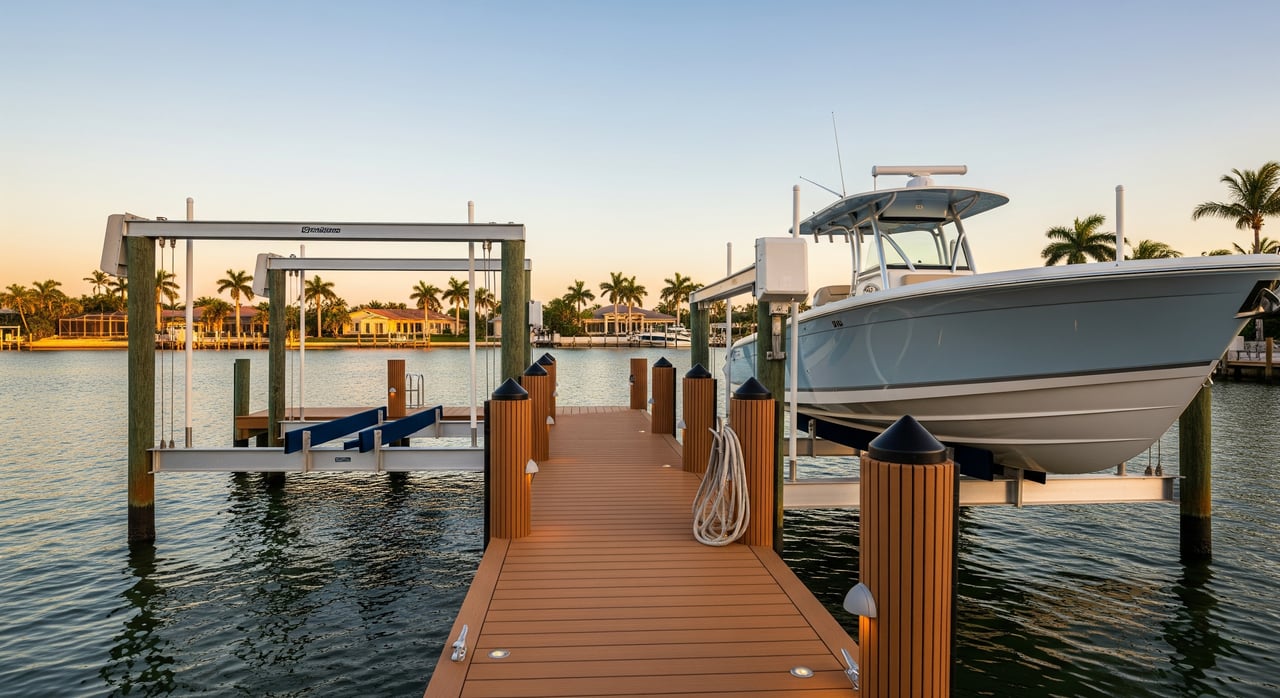
Shopping or selling on Fort Myers Beach and not sure what the dock or lift really means for your boating life and resale value? You are not alone. Waterfront buyers and sellers often focus on the house and view, then discover that dock type, materials, and lift capacity drive day-to-day convenience and long-term costs. This guide gives you practical, Fort Myers Beach–specific insight so you can choose wisely, evaluate listings confidently, and plan upgrades the right way. Let’s dive in.
Dock types on Fort Myers Beach
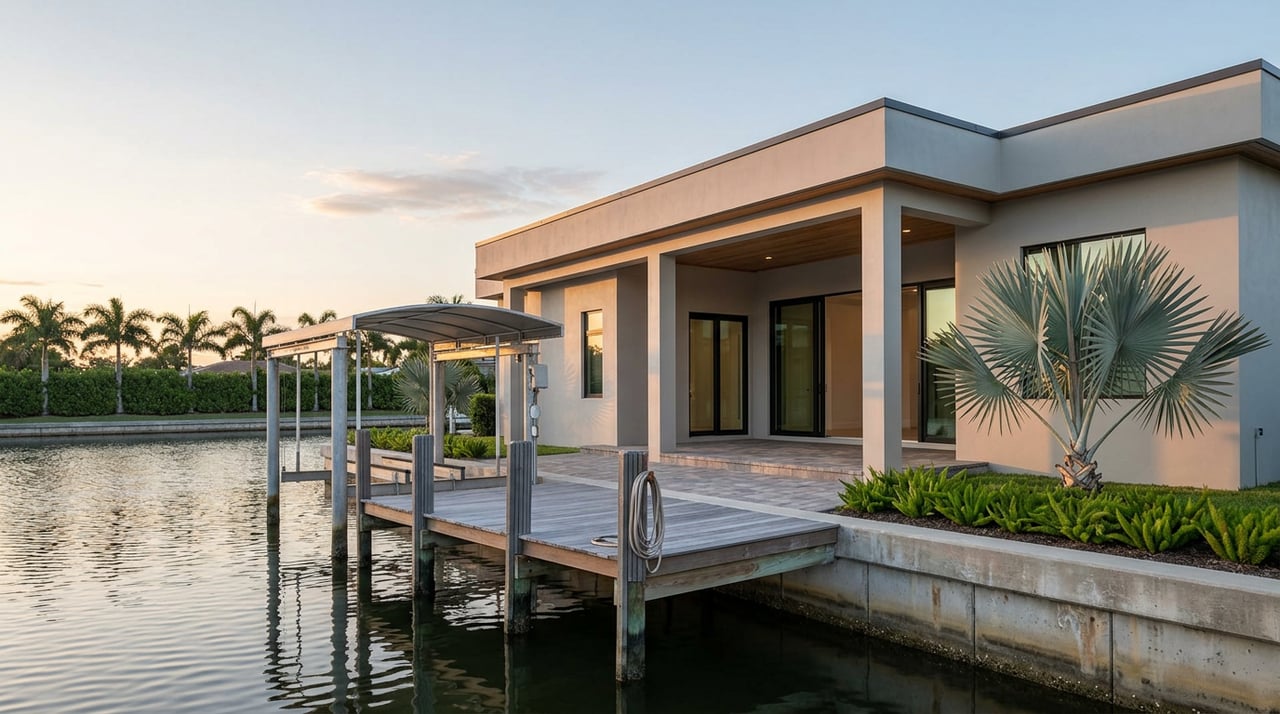
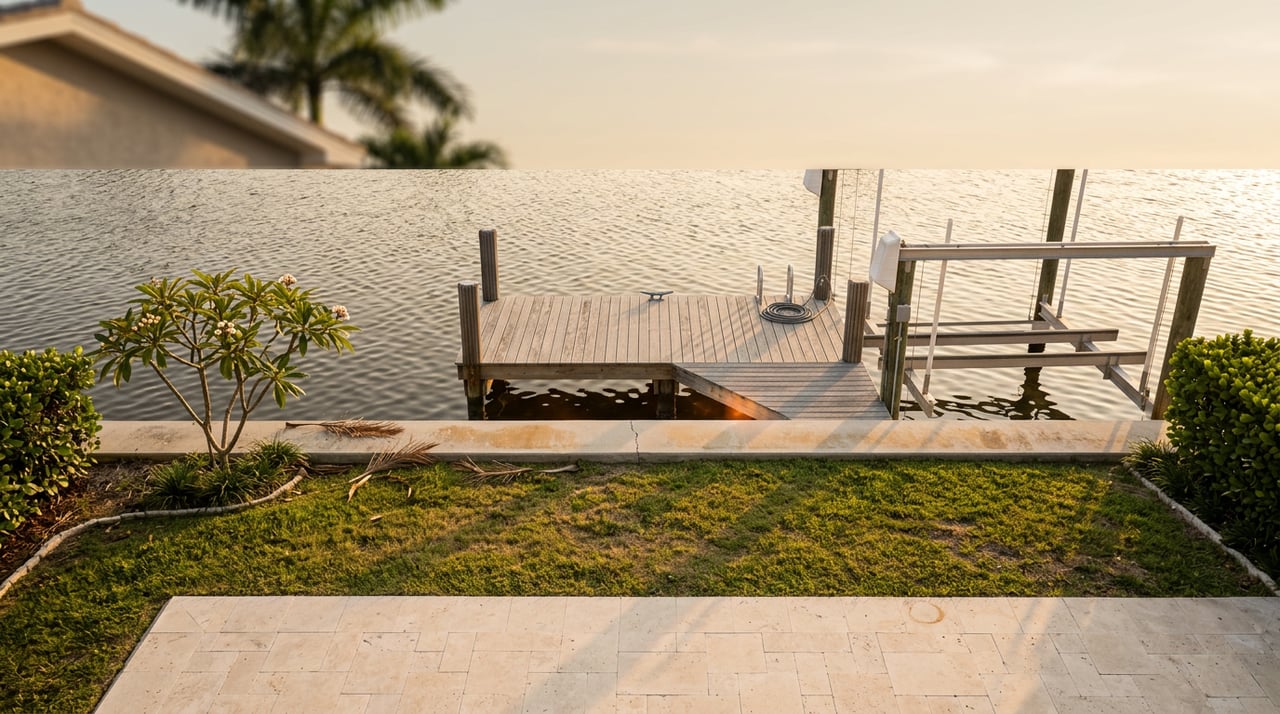
You will see a range of layouts shaped by shoreline, depth, and exposure. Many single-family lots feature seawall-attached docks with a short finger pier extending out into the water. Fixed pile or pier docks with timber or composite decking are common where depth and bottom conditions support pilings.
Where depth varies more, floating docks help maintain consistent boarding height. For more side access, owners often use L-shaped, T-head, or finger pier configurations. Some upscale properties add covered canopies to protect lifts and gear, while multifamily buildings may offer community docks with shared rules for slip and lift use.
Common materials and trade-offs
Material choice affects lifespan, maintenance, and look. Pressure-treated timber keeps initial cost down, while tropical hardwoods offer premium aesthetics with diligent care. Composite decking and PVC/plastic systems reduce rot and maintenance, though they often cost more upfront.
For structure, concrete piles and aluminum framing are valued for durability in saltwater. If you use steel, plan for marine-grade coatings and vigilant upkeep. For hardware and fasteners, 316 stainless steel and sacrificial anodes help counter galvanic corrosion in saltwater.
Boat lift options
Local homes use several lift styles to match vessel type and space. Bunk or cradle lifts support the hull along its length and suit many bay boats and center consoles. Sling or strap lifts distribute pressure for lighter or sensitive hulls.
Vertical or platform lifts raise the boat straight up and can help where space or overhead clearance is tight. Hydraulic lifts offer smooth, quiet operation and higher capacities. Cable or winch lifts are a common, economical choice for smaller and mid-size boats, while floating lifts, PWC lifts, and davit hoists serve specific use cases.
Match lifts to boats
Right-sizing your lift protects your hull and your investment. Choose a capacity rated above the boat’s fully loaded weight, including fuel and gear; a 20 to 30 percent safety margin is a common practice. Match bunk spacing to your beam and hull shape to avoid pressure points.
Confirm prop and outdrive clearance so the lift and pilings do not interfere with the motor. If you plan daily use, electric winch or hydraulic systems add convenience. Also evaluate how the lift location affects maneuvering room and access to channels.
Local site factors to consider
Fort Myers Beach has a modest tidal range, but winds and pressure can push higher currents in inlets and channels. Always verify water depth at mean low tide when selecting dock height and lift placement. Be mindful of shallow flats, seagrass beds, and mangroves that can limit where and how you build.
Hurricanes are a reality in Southwest Florida. Wave action, storm surge, and wind loads can cause significant damage, so design and insurance planning matter. Consider exposure to open Gulf waters versus more protected bay areas when selecting materials and engineering.
Permits and compliance
Dock and lift work typically requires local permits through the Town of Fort Myers Beach and Lee County. Depending on location and scope, you may also need state approvals from the Florida Department of Environmental Protection and guidance from the Florida Fish and Wildlife Conservation Commission, especially where seagrass and mangroves are present.
Some projects fall under federal jurisdiction with the U.S. Army Corps of Engineers. If the property is part of an HOA or condominium, confirm community rules for dock size, lift types, and insurance. Always verify that existing structures have permits and as-built plans, and that they meet setbacks and do not obstruct navigation.
Inspection checklist for buyers
Use this quick reference when touring a property with a dock and lift:
- Documentation: Permits, final inspections, and as-built drawings.
- Structure: Condition of pilings, bracing, and hardware; look for rot or corrosion.
- Decking: Soft spots, loose fasteners, or worn surfaces.
- Lift: Manufacturer plate, model and capacity, motor condition, cables or hydraulics, and anodes.
- Electrical: GFCI protection, marine-grade wiring, tidy junction boxes.
- Seawall: Signs of settling, cracking, or water intrusion.
- Footprint: Confirm slips and walkways match the permitted plan.
- Maintenance: Watch for rusted cables, frayed straps, or damaged bunks.
Maintenance basics and lifecycle
Plan routine care to extend life and control costs. Annually or semi-annually, inspect and replace sacrificial anodes, check and replace worn cables or straps, lubricate moving parts per manufacturer guidance, and assess piles and fasteners. Over the medium term, expect periodic re-bunking, decking replacement, and coating or replacing major hardware.
For corrosion control, stick with 316 stainless where practical and isolate dissimilar metals. Hire licensed marine contractors for electrical work, piling repairs, or complex lift service.
Hurricane preparation
Create a written storm plan early in the season. Many insurers and contractors recommend removing the boat to land or arranging a hurricane haul-out for stronger storms. Some lifts can be engineered for higher wind and wave ratings, but that requires added cost and proper permits.
As a temporary measure, follow your lift maker’s storm-securing steps, remove loose components, and use reinforced straps as directed. After a storm, inspect pilings, wiring, and all lift components before energizing the system or boarding.
Costs to expect
Costs vary by boat size, lift capacity, materials, bottom conditions, electrical needs, permitting, and any environmental mitigation. Small PWC lifts are generally the most affordable. Standard residential lifts for small to medium boats can range from a few thousand to tens of thousands of dollars, and larger custom systems or major dock projects can run higher.
For accuracy, request itemized quotes from licensed local marine contractors and confirm permit fees with the permitting offices.
Next steps for buyers
- Request permits, as-built drawings, and lift service records with your offer.
- Include a dock and lift inspection contingency.
- Verify your boat’s length, beam, and fully loaded weight against the lift’s rating and bunk spacing.
- If upgrades are needed, gather quotes and confirm permit paths before closing.
Next steps for sellers
- Assemble permits, final inspections, and maintenance records before listing.
- Consider a pre-listing dock and lift inspection to handle small repairs.
- Obtain quotes for sensible upgrades buyers may ask about.
- Confirm HOA or community rules to avoid surprises during escrow.
Your local waterfront resource
A smart dock and lift plan protects your boating lifestyle and your property value on Fort Myers Beach. Whether you are comparing listings or planning an upgrade, you deserve clear, practical guidance tailored to your boat, your site, and local rules. If you want a second set of eyes on a dock or lift before you make a move, connect with Heather Porrett for local, waterfront-focused support.
FAQs
What dock types are common on Fort Myers Beach?
- Seawall-attached docks, fixed pile or pier docks, floating docks in variable depths, and L-shaped, T-head, or finger piers, with some properties adding covered canopies.
How do I size a boat lift for my vessel on Estero Island?
- Choose a lift rated 20 to 30 percent above your boat’s fully loaded weight and ensure bunk spacing and cradle fit match your hull shape and beam.
Do I need permits to build or modify a dock in Lee County?
- Yes; expect local permits and, in some cases, state or federal approvals where seagrass, mangroves, or navigable waters apply, plus any HOA rules.
Can I leave my boat on a lift during a hurricane in Southwest Florida?
- Many professionals recommend removing boats for major storms; confirm your lift maker’s guidance and insurer requirements before hurricane season.
What maintenance do saltwater docks and lifts need near Fort Myers Beach?
- Plan regular anode replacement, cable or strap inspection, motor service, hardware checks, and periodic re-bunking and decking updates by licensed contractors.
What documents should I request when buying a home with a dock?
- Ask for permits, final inspections, as-built drawings, lift model and capacity plate, service records, and any photos or reports on underwater components.