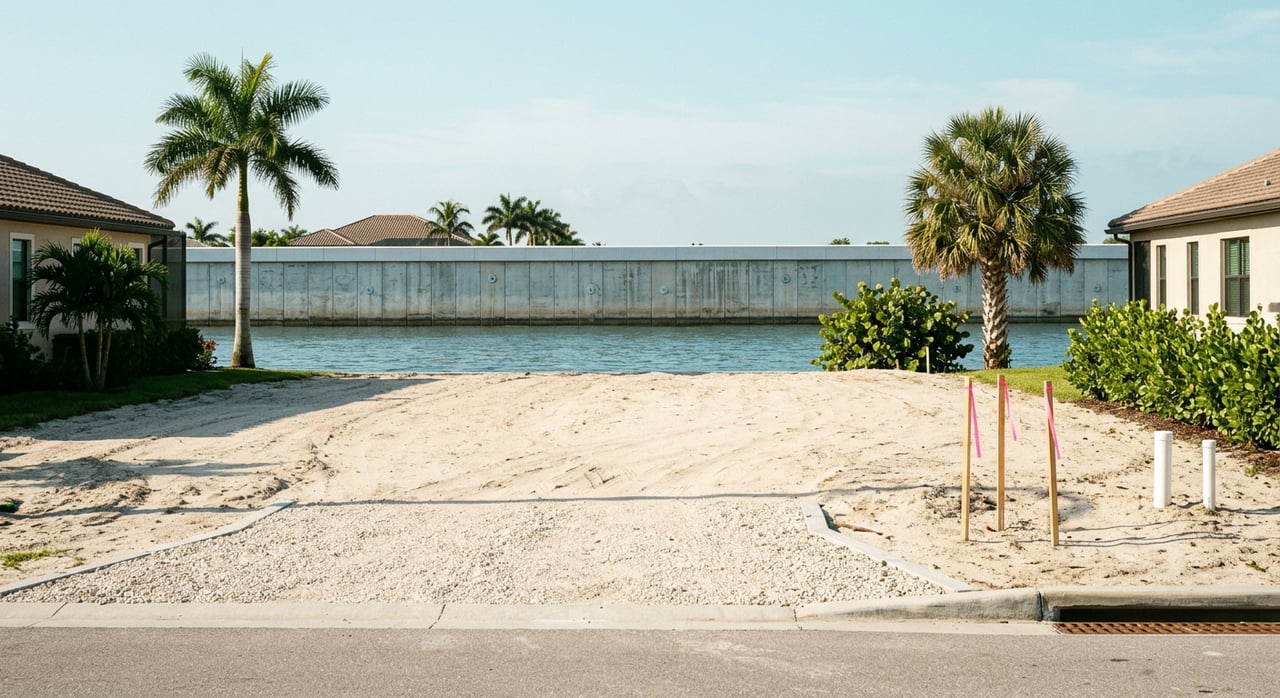
You picture morning coffee on the dock, lines in the water, and a straight shot to the Gulf. Buying a vacant waterfront lot in Cape Coral can get you there, but only if you handle the technical pieces the right way. In this guide, you’ll learn how to vet seawalls, docks, flood zones, utilities, and permits so you can buy with confidence. Let’s dive in.
Know your waterfront lot type
Gulf access vs freshwater canals
Not all canals are the same. Some lots sit on freshwater canals with no boat route to open water, while others offer Gulf access on saltwater or tidal canals. River or bay shoreline lots sit on the Caloosahatchee River or near Matlacha Pass. Before you write an offer, confirm the exact canal system and practical boating route to open water.
Locks, bridges, and boat route
If you plan to keep a specific boat at your future dock, check bridge clearances, draft limits, and whether you must pass through any locks or lifts. These factors affect travel time, boat size, and daily convenience. Ask for route details early and verify them with local sources and city updates.
Public navigation rights
Cape Coral treats many waterways as public easements for navigation. Your marine improvements cannot block navigation and may be required to move if they interfere with public use. Review the city’s rules on marine structures and public waterways in the City Code on seawalls and marine improvements.
Seawalls: rules, inspections, costs
What the city and state require
If your lot fronts saline, brackish, or tidal water, the city requires a seawall, and owners are responsible for construction and maintenance. Shoreline work is layered: the City of Cape Coral permits the project, and the Florida Department of Environmental Protection (FDEP) and U.S. Army Corps of Engineers (USACE) may also review it. Start with the city’s Permit Document Center for seawall guidelines. Cape Coral has historically used a USACE programmatic permit that streamlines some single‑family docks and seawalls; always verify current conditions in the USACE Jacksonville public notice.
Common limits to expect
Permits often cap how far a replacement wall can move waterward of the prior permitted line or the mean high water line. Backfill, riprap, and footer designs are controlled by specific footprints and depths. Mangrove trimming or removal needs special approvals and can carry mitigation requirements; for background, see FDEP’s guidance on mangrove rules and FAQs.
What to inspect before you buy
Ask the seller for seawall permits, engineering reports, and repair invoices. Then bring a licensed marine contractor and structural engineer to check for panel separation, tilting, spalling, erosion or voids behind the wall, and toe scouring. The city outlines submittals and repair standards in the Permit Document Center; use these as a checklist.
Budgeting for seawall work
Seawall pricing varies by material, access, depth, and environmental needs. Regional guidance shows ranges from several hundred to over a thousand dollars per linear foot for replacement. A 100‑foot wall can land in the tens to low hundreds of thousands depending on scope. Use these as planning figures and get at least two written quotes with the same scope and permit assumptions; see example ranges discussed by industry sources like this Florida seawall cost overview.
Docks and boat lifts: permits and footprints
Permits and setbacks
Dock approvals run through the City, FDEP, and sometimes USACE. Florida’s riparian rules commonly require a 25‑foot setback from extended riparian lines, while marginal docks along established seawalls can have different minimums. Always verify your lot’s riparian lines with a survey and review the state riparian setback rule text. Start your planning with the city’s residential dock guidelines in the Permit Document Center and FDEP’s South District overview of docks and ERP/submerged lands permitting.
Exemptions and timelines
Some small single‑family docks may qualify for FDEP exemptions or the state’s self‑certification route, but criteria are narrow and site specific. Ask for written FDEP exemption verification before you rely on it. Plan timelines accordingly: local permits may take weeks to a couple of months, while FDEP individual or USACE standard permits can take several months for complex sites. Contractor guidance for Southwest Florida shares these general timeframes; see this overview of dock permitting steps and timing.
Flood, elevation, and insurance
Cape Coral uses FEMA flood maps updated on November 17, 2022. The city applies NFIP substantial‑improvement rules and freeboard on top of Base Flood Elevation in many situations. Expect to provide an Elevation Certificate and coordinate finished‑floor elevation with your builder. Use the city’s flood portal to review BFE, Elevation Certificates, and LOMA/LOMR‑F topics on the Cape Coral Flood Information page.
Soil, utilities, and builder planning
Soils and foundations
Many lots were filled during canal construction, so geotechnical borings are important. Your builder may recommend compacted pads or deep foundations depending on soils and flood design. Confirm submittal needs and reporting with the city’s checklists in the Permit Document Center.
Water, sewer, and UEP assessments
Some vacant lots still show well and septic. Cape Coral’s Utilities Extension Project is adding city water and sewer to remaining areas on a phased schedule. Verify whether your parcel is in a UEP zone, whether assessments apply, and the expected connection window. Start with the city’s UEP resource hub.
Make a strong, safe offer
Use these checks as part of your offer or immediate due diligence:
- Order a shoreline survey that shows Mean High Water and riparian lines; confirm setbacks under the state riparian rule.
- Request copies of all seawall and dock permits, as‑builts, and any Elevation Certificates; verify status with the city via the Permit Document Center.
- Hire a marine contractor and structural engineer for a seawall inspection and written estimate; use findings to negotiate repairs or credits.
- If planning new marine work, ask FDEP whether the project is exempt, a general permit, or an individual permit using the South District guidance and request written verification.
- Check for mangroves or submerged vegetation and understand permit and mitigation implications using FDEP’s mangrove FAQs.
- Confirm flood zone, BFE, and freeboard on the city’s flood page; get a flood insurance quote based on a current Elevation Certificate.
- Verify UEP status, assessments, and connection timing at the UEP resource hub.
- Build a conservative budget for seawall and dock work, including a 10 to 20 percent contingency for permitting and environmental items; use local written bids and cost ranges like those in this Florida seawall cost overview.
Next steps
Buying the right Cape Coral lot starts with the right questions. When you have a clear view of seawall condition, dock limits, flood elevation, and utilities, you can plan your build and boating life with confidence. If you want a waterfront specialist who speaks permits, surveys, and boat routes, connect with Heather Porrett to map your next move.
FAQs
What should I inspect on a Cape Coral seawall before buying?
- Ask for prior permits and engineering, then have a marine contractor and structural engineer inspect for panel separation, tilting, spalling, erosion behind the wall, and toe scouring.
How do flood maps affect my Cape Coral build plan?
- The city follows updated FEMA maps, applies NFIP rules and freeboard, and often requires an Elevation Certificate, which influences finished‑floor elevation and insurance.
Do I need permits for a small single‑family dock in Cape Coral?
- Some small docks may fit FDEP exemptions or self‑certification, but you should get written FDEP verification and follow city submittal requirements.
What is the difference between Gulf‑access and freshwater lots?
- Gulf‑access canals connect to tidal waters and the Gulf, often with bridges or locks along the route; freshwater canals do not provide boat access to open water.
How could the Utilities Extension Project impact my budget?
- If your lot is in a UEP area, you may face assessments and a required future connection to city water and sewer, which affects both upfront and ongoing costs.