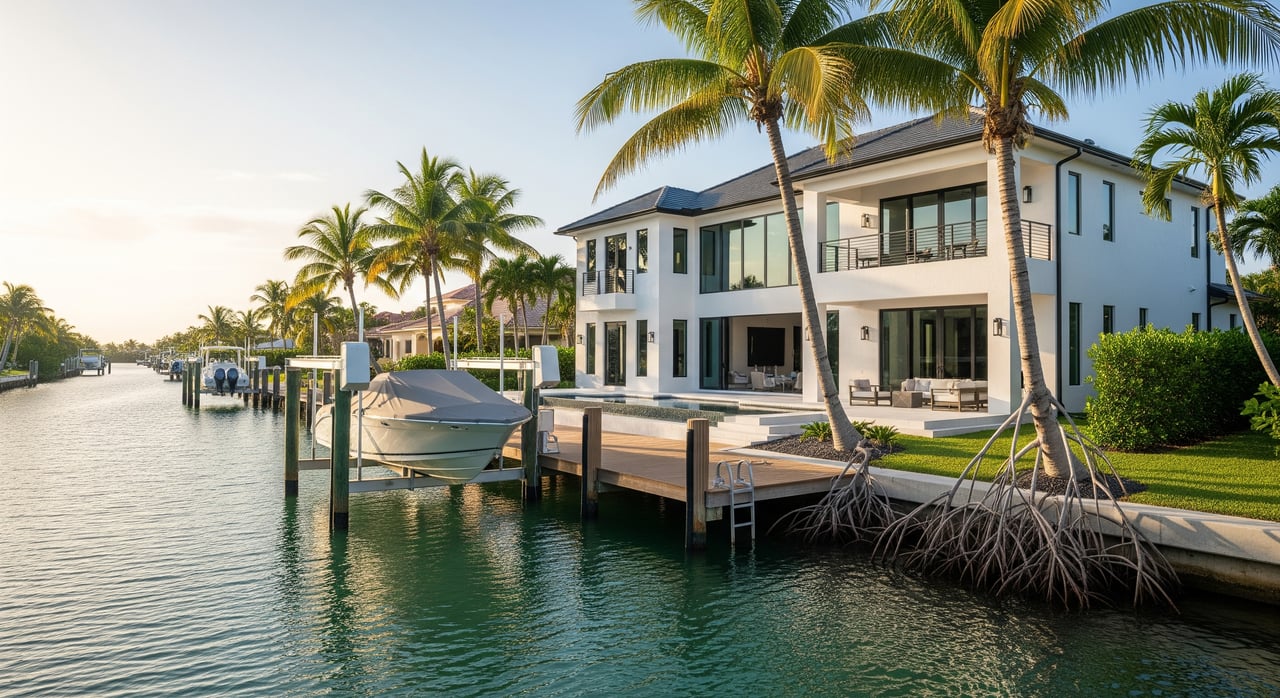
Are two Cape Coral waterfront lots on different canals worth the same? Not usually. With roughly 400 miles of canals, the type of water behind your home can change what buyers will pay. If you plan to sell, you need a pricing strategy that reflects navigability, view, seawall condition, and dock capabilities. This guide breaks it down in plain terms so you can position your home with confidence. Let’s dive in.
Why canal type changes buyer demand
Waterfront buyers in Cape Coral are not all the same. Some want quick Gulf access for larger boats. Others care more about calm, protected water for kayaks and paddleboards. Many lifestyle buyers pay for wide views and sunset orientation. Investors weigh ongoing costs, insurance, and resale liquidity.
These priorities translate into different price expectations. Homes with easier boating routes, broader views, and sound shoreline structures typically draw stronger offers. Properties with bridge or depth limits, aging seawalls, or unpermitted docks face closer scrutiny and potential discounts.
Key canal factors that move price
Access and navigability
- Direct Gulf or river access with no fixed bridges is usually the most valuable for serious boaters. Larger boats can clear to the Caloosahatchee River faster and with fewer restrictions.
- Intersecting or wide canals combine broader maneuvering space with better circulation and views. These often price higher than narrow feeder canals.
- Dead-end or narrow feeder canals appeal to buyers who want quiet water, but they are less attractive to those seeking room for larger boats or faster Gulf runs.
- Shallow or silting canals limit boat size and may require dredging. That risk reduces value for boater-focused buyers.
Canal width and view quality
- Wide canals and basins create dramatic sightlines and easier boat traffic, which typically increases demand.
- Narrow canals can feel enclosed and may offer limited vistas.
- Obstructions like mangroves, bridges, or heavy traffic can affect perceived value by changing both the view and the daily boating experience.
Lot frontage and orientation
- Linear waterfront footage matters. More feet of seawall usually means better moorage options and a broader water feel.
- Orientation influences both lifestyle and maintenance. West-facing lots often attract buyers who want sunset views. East-facing can be preferred for morning light and potential wind protection. Exposure can also affect wake and upkeep.
- Lot depth and shape behind the seawall determine how you use your outdoor space and where a dock fits. Odd shapes or narrow buildable areas can trim value.
Seawall condition and shoreline protection
- Age and structural condition of the seawall are major price drivers. A recent rebuild helps preserve value. A failing wall can lead buyers to reduce offers due to expensive replacement and permitting.
- Material and maintenance history also matter. Buyers and appraisers look for documentation on repairs and inspections.
Dock and lift specifications
- Dock type, length, and materials impact utility. Pilings, lighting, and shore power improve day-to-day use.
- Lift capacity and condition set the stage for the size of boat a buyer can keep. A larger, well-maintained, permitted lift is a plus for boating households.
- Permitting status is critical. Unpermitted or unsafe structures hurt marketability and can add seller costs to correct.
Bridges and vertical clearance
- Fixed bridges between your lot and open water limit mast height and sometimes beam. Low-clearance bridges cut down the buyer pool, especially for sailboats and tall vessels.
- No fixed bridges on the route to the Gulf tends to command stronger boater interest.
Water quality and environment
- Water clarity, staining, and algae can change buyer perception of the canal. Proximity to mangroves and no-wake zones may affect navigability and improvement options.
- Freshwater vs. tidal influence draws different buyers. Saltwater anglers often prefer tidal canals; paddle and casual recreation buyers may value calm freshwater settings.
Flood zones, storm surge, and insurance
- FEMA flood zones and base flood elevations affect insurance costs and lender requirements. Higher-risk zones can lead to increased premiums and price sensitivity.
- Seawall elevation and local code compliance also shape how buyers view storm resilience.
Build your pricing plan
Step A: Define your comp pool
Start with hard filters so you only compare like to like:
- Waterfront only. Skip non-waterfront comps.
- Match canal access type: Direct Gulf access, intersecting/wide Gulf access, narrow feeder, dead-end/private, or non-navigable/retention.
- Keep frontage within about ±20–30 percent of your linear seawall feet.
- Match orientation and usable yard area when you can.
- Keep home size, bed/bath count, and age/condition as similar as possible (size within roughly ±15 percent is a good target).
Step B: Prioritize secondary filters
Once you have a tight pool, sort by these:
- Dock and lift presence, size, condition, and permits.
- Seawall condition and age.
- Water depth at the seawall, if known.
- Bridge proximity and clearance along the route to the river.
- Sale recency. Aim for the last 6 to 12 months; extend to 12 to 24 months if activity is slow.
Step C: Make thoughtful adjustments
Use a simple score-to-adjust approach and validate with local sales. The ranges below are illustrative and market-dependent:
- Canal access tier: Direct Gulf access tends to score highest; narrow feeder canals are neutral; dead-ends can be a slight positive for privacy but negative for boating utility.
- Water frontage: Consider price per waterfront foot as a checkpoint. For big frontage gaps, a percentage adjustment may be more realistic.
- Dock and lift: A functional, permitted, larger-capacity lift earns a positive. No dock can mean a noticeable negative if most buyers expect moorage.
- Seawall condition: New or recently rebuilt preserves value. A failing wall can trigger a significant downward adjustment or a deduction tied to replacement estimates.
- Canal width and view: Wide or open-water views score higher than narrow or obstructed views.
- Bridge clearance: Low fixed bridges reduce boating utility and can lead to meaningful discounts depending on severity.
- Water depth: Shallow water that limits boat size is a negative, while deep water is a positive.
- Flood zone and insurance: Higher-risk zones may require downward adjustments informed by expected premium differences and mitigation costs.
Keep adjustments conservative and anchor them to what nearby buyers actually paid for similar canal situations.
A simple waterfront utility score
Use this 10-point model to discuss price positioning with your agent. It is a communication tool, not an appraisal.
- Access (3 points): Direct Gulf or river access with no fixed bridges scores highest; restricted routes score lower.
- Dock and seawall (3 points): Permitted, functional dock plus a sound or recently rebuilt seawall score highest; failing or unpermitted structures score lowest.
- View and width (2 points): Wide canals or basins with clean sightlines score higher than narrow or obstructed views.
- Depth and bridges (2 points): Deeper water and no low-clearance bridges score higher; shallow water or low bridges score lower.
How to interpret:
- 8–10 points: Premium marketability. Consider pricing at or above neighborhood waterfront averages with strong justification.
- 5–7 points: Typical waterfront utility. Price near area norms supported by like-for-like comps.
- 0–4 points: Limited utility for boaters. Consider a pricing strategy focused on lifestyle buyers and transparency about constraints.
Prep your listing for maximum appeal
Documentation reduces buyer uncertainty and supports your price.
- Seawall: Build year, repair history, and any recent inspection.
- Dock and lift: Permit records, lift capacity, materials, electrical hookups, and photos.
- Water depth: At the seawall and any known channel depth information.
- Route constraints: Fixed bridges and vertical clearance on the way to the river or Gulf.
Marketing angles to consider:
- Direct-access homes: Highlight estimated run times to the river, lift capacity, and the absence of bridge restrictions.
- Quiet or dead-end canals: Emphasize privacy, calmer water, and easy paddle access.
- Known issues: Provide contractor quotes for seawall or dock work. This can keep negotiations on track and reduce price erosion later.
Avoid common pitfalls
- Relying only on price per waterfront foot. Use it as a checkpoint, not your final answer. House size, upgrades, orientation, and access type matter.
- Overlooking permits. Unpermitted docks, lifts, or seawall work can delay or jeopardize closing and reduce your net.
- Ignoring flood and insurance impacts. Lender requirements and premium costs influence what buyers can afford.
- Using mismatched comps. Non-waterfront or different access types will skew your pricing.
Ready to price with precision?
You deserve a pricing plan that reflects your canal’s strengths and any constraints. Want a waterfront-specific valuation for your Cape Coral home? Request a tailored valuation from Heather Porrett — she will analyze canal type, dock and seawall condition, and local waterfront comps to produce a targeted price range for your property.
FAQs
How do different canal access types affect a sale price in Cape Coral?
- Direct Gulf or river access often brings the strongest buyer demand, while narrow or dead-end canals appeal to privacy-focused buyers and may price differently.
Does a dock always add value when selling a waterfront home?
- Usually, yes, especially for boating buyers, but an unpermitted, undersized, or unsafe dock can be neutral or negative.
How much can seawall condition change my price?
- Significantly; a failing or aging seawall can lead buyers to discount for replacement and permitting costs, while a recent rebuild helps preserve value.
Do west-facing lots really get a premium?
- Often, yes; many buyers value sunset views, but you should confirm the effect by comparing recent like-for-like sales on similar canals.
Will a low fixed bridge reduce my buyer pool?
- Yes; low-clearance bridges limit certain boats, especially sailboats or tall vessels, and can require price adjustments based on market evidence.
Should I still use price per waterfront foot to set my ask?
- Use it as a checkpoint, then validate with a full comp analysis that considers access, view, seawall, dock, depth, bridges, and flood factors.