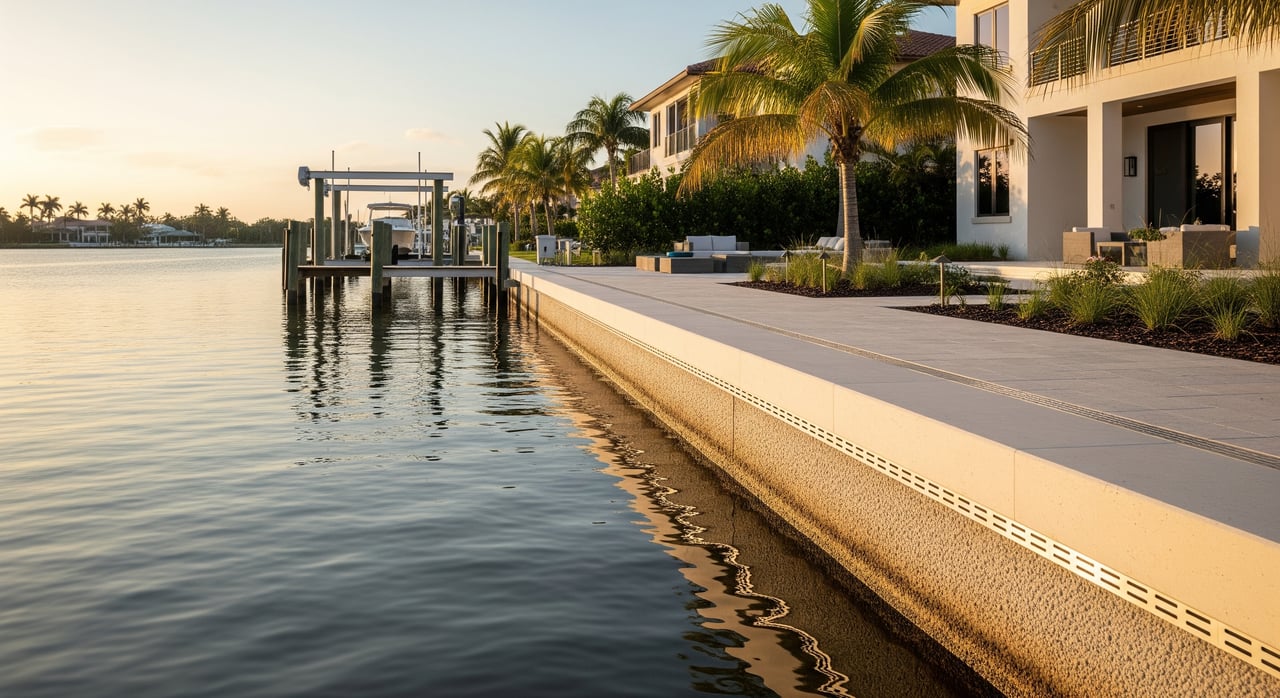
If you own or plan to buy a waterfront home in Naples, your seawall is your first line of defense. It protects your yard, dock, and home from daily tides and big storms. Understanding how seawalls age and what to watch for helps you avoid costly surprises. In this guide, you’ll learn the basics of seawall types, lifespan, warning signs, maintenance, permits, costs, and how condition impacts value during a sale. Let’s dive in.
Why seawalls matter in Naples
Naples and the rest of Collier County sit on low-lying coastlines that face daily tidal action, boat wake, and seasonal storms. Hurricanes and storm surge can add powerful short-term loads. Over time, relative sea-level rise and saltwater exposure increase stress on shoreline structures. Planning for both everyday wear and major events helps your seawall last longer.
Common seawall types and lifespans
Waterfront lots in Southwest Florida use several materials. You will see reinforced concrete walls and caps, precast concrete panels, steel or vinyl sheet piling, and older timber bulkheads. Stone riprap is often added as toe protection. Some sites consider living shoreline or hybrid approaches, though not every lot is suitable.
Concrete walls, when well built and maintained, generally offer the longest service life. Steel and vinyl vary based on coatings and corrosion control. Timber usually has the shortest life. Real-world lifespan depends on design, soil, construction quality, exposure, maintenance, and storm history. A site-specific assessment is the only way to estimate remaining life.
Early warning signs you can spot
Inspect your seawall at least once a year and after any major storm or vessel impact. Photograph what you see and note changes.
Face of the wall
Look for bowing, bulging, leaning, or rotation. Check for cracks, including horizontal or diagonal patterns. Note any exposed rebar or rust stains and gaps between panels or failed joints. Missing or damaged caps also matter.
Toe and foreshore
Scan for scour at the base of the wall. Voids, undercut areas, or steep slope changes suggest undermining. Track any loss of shoreline material over time.
Drainage and yard
Watch for water pooling behind the wall, damp spots, or new sinkholes and yard sags. Confirm weep holes and drains are clear and functioning. Poor drainage raises pressure behind the wall.
Impact and recurring issues
Note boat strike marks or dents. Repeated patching in the same place can signal a deeper failure point. If neighboring lots show issues, remember many seawalls function as a system.
What to document
Take dated photos with location notes and linear-foot markers if possible. Measure notable displacement or crack widths. Keep records of prior repairs, contractor names, and any engineering reports. Note proximity to boat slips or high-energy channels.
Routine care that pays off
- Inspect and photograph your seawall yearly, and after storms.
- Keep weep holes and drainage paths clear and functional.
- Grade soil and manage landscaping so water flows away from the wall.
- Reduce high-energy wakes near your bulkhead and follow no-wake rules.
- Address small cracks and surface spalls early with the right materials.
Repairs and when to act fast
Typical fixes
Common actions include minor patching, joint and seal replacement, adding toe protection like riprap, and pressure grouting to fill voids. Some steel systems use sacrificial anodes or cathodic protection, which requires engineering review. Severely deteriorated segments may need partial replacement. Extensive damage often points to full rehabilitation.
When patching is not enough
Call a licensed marine or structural engineer if you see major undermining at the toe, wall rotation or pronounced bowing, large areas of exposed or corroded rebar, or repeated failures. Any structural compromise that lets water intrude into the yard or near foundations is a red flag. An engineer and experienced marine contractor can design the right solution.
Permits and timelines in Collier County
Shoreline work usually needs approvals from more than one agency. Expect local permits through the Collier County Growth Management and Building departments. Many projects require state environmental resource permits from the Florida Department of Environmental Protection. Work in navigable waters or wetlands may also involve the U.S. Army Corps of Engineers.
Plan for permits to add weeks to months to your schedule. You may need engineering plans, erosion control measures, and environmental documentation. Projects can have specific work windows and turbidity controls, especially if seagrass, mangroves, or fisheries habitat is present. Contractors with Collier County experience can help reduce delays.
Choosing the right specialists
- Licensed Professional Engineer with coastal or marine experience for assessment and design.
- Licensed marine or shoreline contractor with a Naples or Collier County track record.
- Permitting specialist familiar with local, state, and federal processes.
- Environmental consultant if sensitive resources are involved.
Ask for proof of licenses, insurance, and bonds. Request references and recent local examples. Decide who will obtain permits and include the review timeline in the schedule. Get a detailed written estimate that breaks out mobilization, dewatering, materials, disposal, permit and engineering fees, and warranty terms.
Budgeting and cost planning
Costs vary by wall length, material, site conditions, access, toe protection needs, and permit requirements. Small repairs can be modest. Full replacement can be a major investment that scales with lot size and scope. For significant work, obtain an engineering evaluation and at least three qualified bids. Build permit fees and timelines into your plan.
Buying or selling with a seawall
Seawall condition influences marketability and perceived value. Visible or structural problems are often handled through seller repairs, credits, price adjustments, or escrow holdbacks. Buyers commonly request a specialized seawall or marine inspection and may add an engineer review contingency.
Sellers in Florida are generally expected to disclose known material defects, which typically includes known seawall issues or prior repairs. Lenders and title companies may request inspection documents or engineering reports for waterfront transactions. Seawall deterioration can affect flood risk and insurance assessments. Discuss any changes with your insurance broker and review NFIP requirements and private underwriting criteria.
Practical action plan
- Schedule a documented seawall inspection every year and after storms.
- Maintain clear records of photos, repairs, engineering reports, and permits.
- Improve grading and drainage to reduce pressure behind the wall.
- For structural signs like scour, bowing, exposed rebar, or rotation, call a licensed marine structural engineer.
- Verify licenses and insurance and secure at least three bids for major work.
- Start permits early to keep your project on schedule.
- During a sale or purchase, obtain a current seawall condition report and account for repair timing and cost in negotiations.
Ready to talk Naples waterfront?
Whether you are buying or selling, a smart seawall plan protects value and peace of mind. If you want a clear strategy for inspections, permits, and negotiations, let’s connect. Work with Heather Porrett — Start Your Waterfront Search.
FAQs
How often should I inspect a Naples seawall?
- At least once a year and after any major storm or known vessel impact, and before buying or selling a waterfront property.
What permits are needed for seawall work in Collier County?
- Most projects require local building permits, state environmental resource permits, and sometimes federal permits if work is in navigable waters or wetlands.
What are the top warning signs of seawall failure?
- Bowing or leaning walls, toe scour and voids, exposed or corroded rebar, widening cracks, water intrusion behind the wall, and recurring failures in the same spot.
Who should evaluate serious seawall damage?
- A licensed marine or structural engineer for assessment and design, plus a qualified marine contractor experienced with Collier County projects.
How long does seawall replacement typically take?
- Timelines vary by scope and permitting, but permits often add weeks to months, and construction depends on site access, materials, and environmental conditions.
Do living shorelines work in Naples canals?
- Living or hybrid shorelines are considered where conditions allow, but not every canal lot is suitable, so you should consult an engineer for site-specific feasibility.
How does seawall condition affect a home sale?
- Buyers often request specialized inspections, and issues can lead to repairs, credits, price changes, or escrow holdbacks, so documentation and clear negotiation plans help.